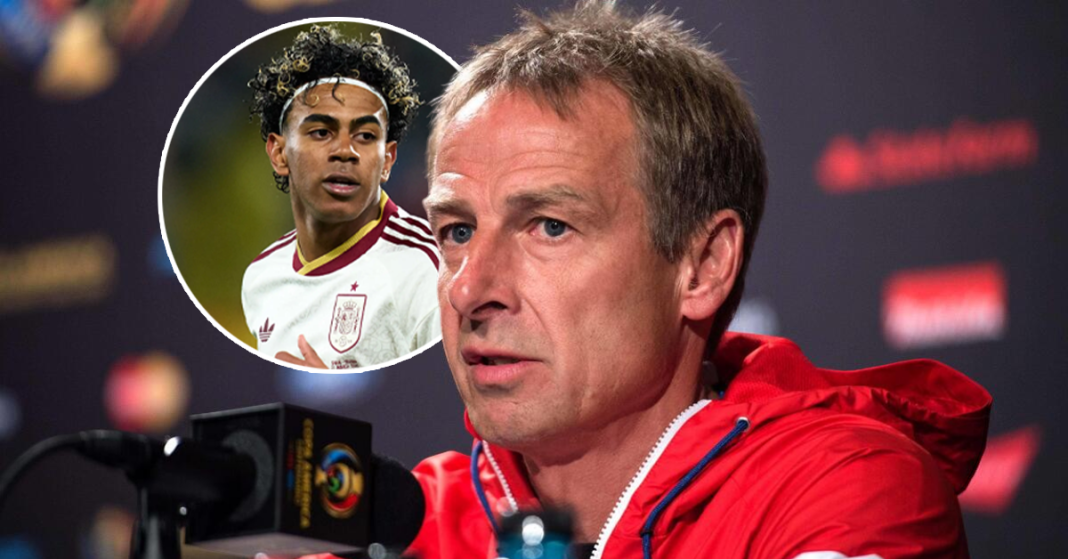
The fallout from Italy’s shocking failure to qualify for the 2026 World Cup continues to generate intense debate across the globe. Missing the world’s most prestigious international tournament for the third consecutive time has exposed deep-rooted issues within Italian football, and legendary German striker Jürgen Klinsmann has not held back his criticism of the current state of Serie A.
Klinsmann Blames Structural Flaws and Lack of Trust in Youth
 Klinsmann, who spent a significant portion of his illustrious playing career in Italy with Inter Milan, believes the crisis extends far beyond a single generation of underperforming players. The German icon pointed directly to the structural issues in Serie A, specifically highlighting the lack of opportunities given to emerging young talents.
“Italy is paying the price for the absence of leaders, technically gifted players, and a distinct lack of trust in youth,” Klinsmann stated during a recent interview.
The “Lamine Yamal” Comparison
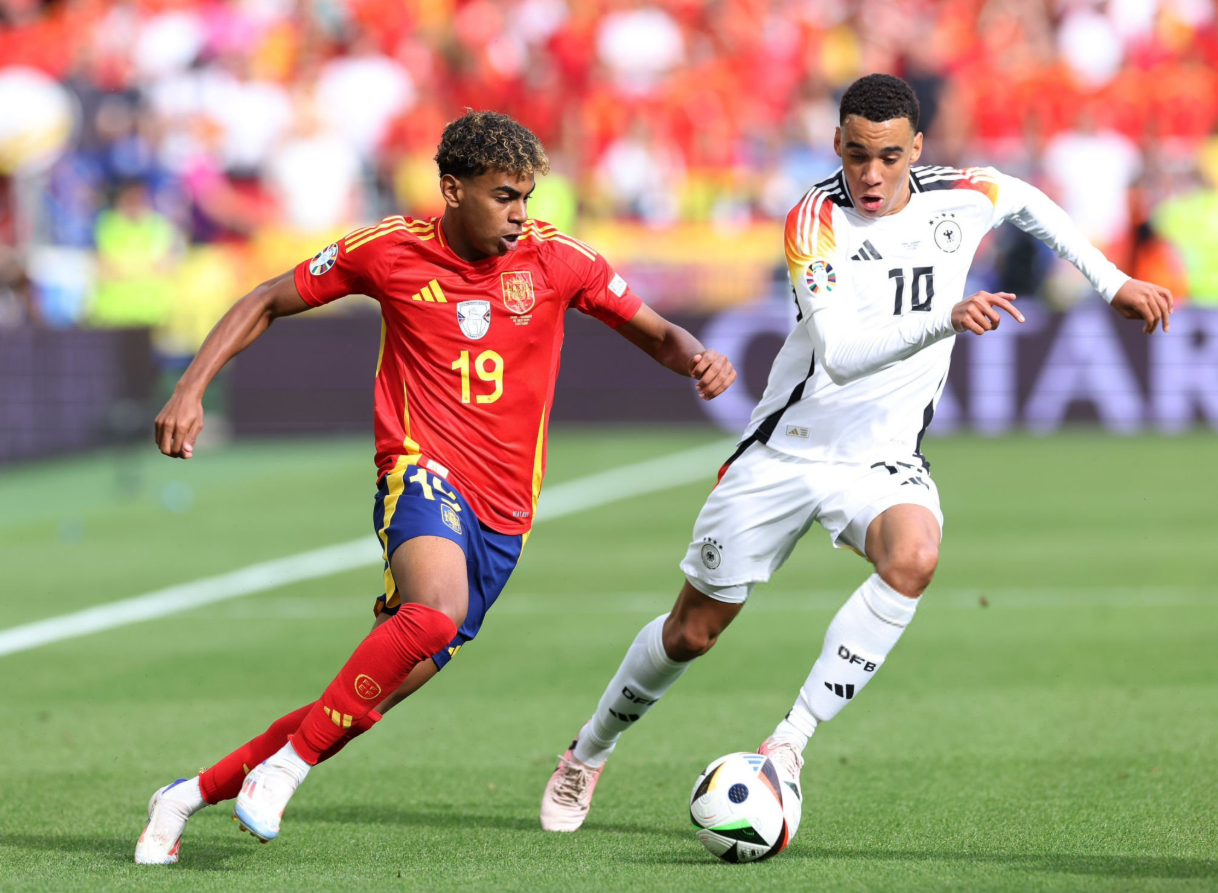 To drive his point home, Klinsmann made a striking comparison that immediately sparked debate across European football circles. He referenced two of the sport’s brightest teenage superstars, Spain’s Lamine Yamal and Germany’s Jamal Musiala, to illustrate Italy’s flawed developmental pathway.
“In Italy, players like Lamine Yamal or Jamal Musiala would probably be playing in Serie B just to gain experience,” Klinsmann argued. He stressed that the traditional Italian football structure stifles the immediate integration of world-class youth prospects into top-tier starting lineups, opting instead for a slower, often frustrating loan system.
A Culture of Fear Holding Italy Back
Beyond the treatment of young players, Klinsmann also criticized the tactical mentality that continues to permeate Italian football. He argued that too many coaches in the country still prioritize defensive solidity and avoiding defeat over playing expansive, attacking football to secure a win.
“That culture is a massive obstacle. Teams play with fear, and these are the results you get,” he explained.
Sympathy Amidst the Criticism
Despite his harsh assessment, Klinsmann expressed genuine heartbreak over Italy’s current footballing tragedy. Having formed strong bonds during his time in Milan, he admitted that the heartbreaking defeat to Bosnia and Herzegovina, the match that ultimately sealed the Azzurri’s elimination, took a personal toll on him.
“I suffered a lot for my Italian friends. I even had trouble sleeping after the match,” Klinsmann confessed.
As Italian football enters a crucial period of reflection following this latest disaster, Klinsmann’s remarks serve as a harsh but necessary wake-up call. If the nation hopes to reclaim its former glory and compete at future World Cups, systemic reform and a renewed faith in youth development must become top priorities.