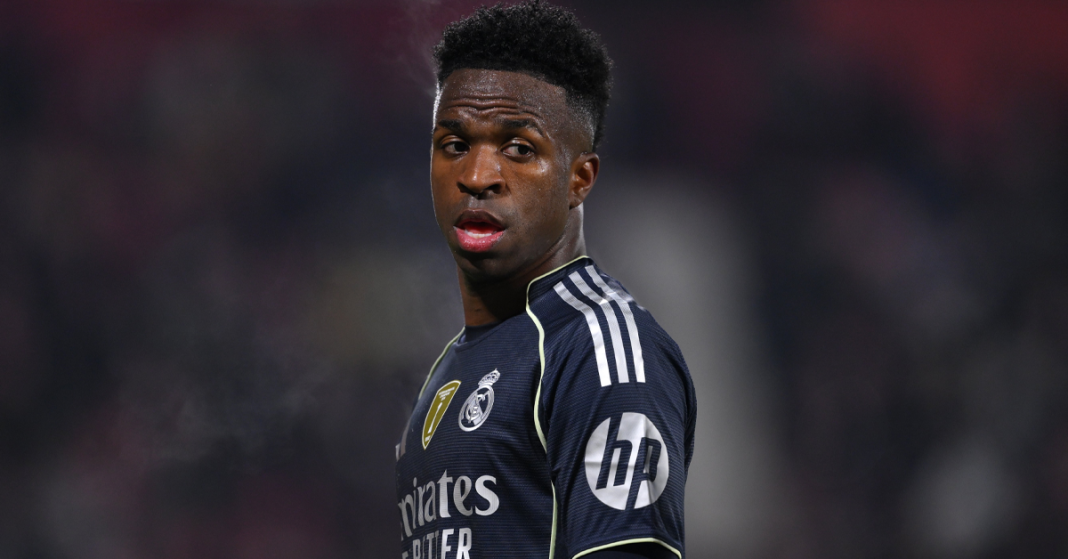
The contract dispute between Vinicius Junior and Real Madrid remains unresolved, and the circumstances seem far more complicated than originally thought.
The Brazilian’s existing agreement with Madrid runs out at the close of June 2027, leaving him in the last year of the contract he originally penned in 2022.
Should a new deal fail to materialize, he has been rumored to be heading to Premier League title-holders Arsenal, as Gunners manager Mikel Arteta is highly interested in bringing the winger on board.
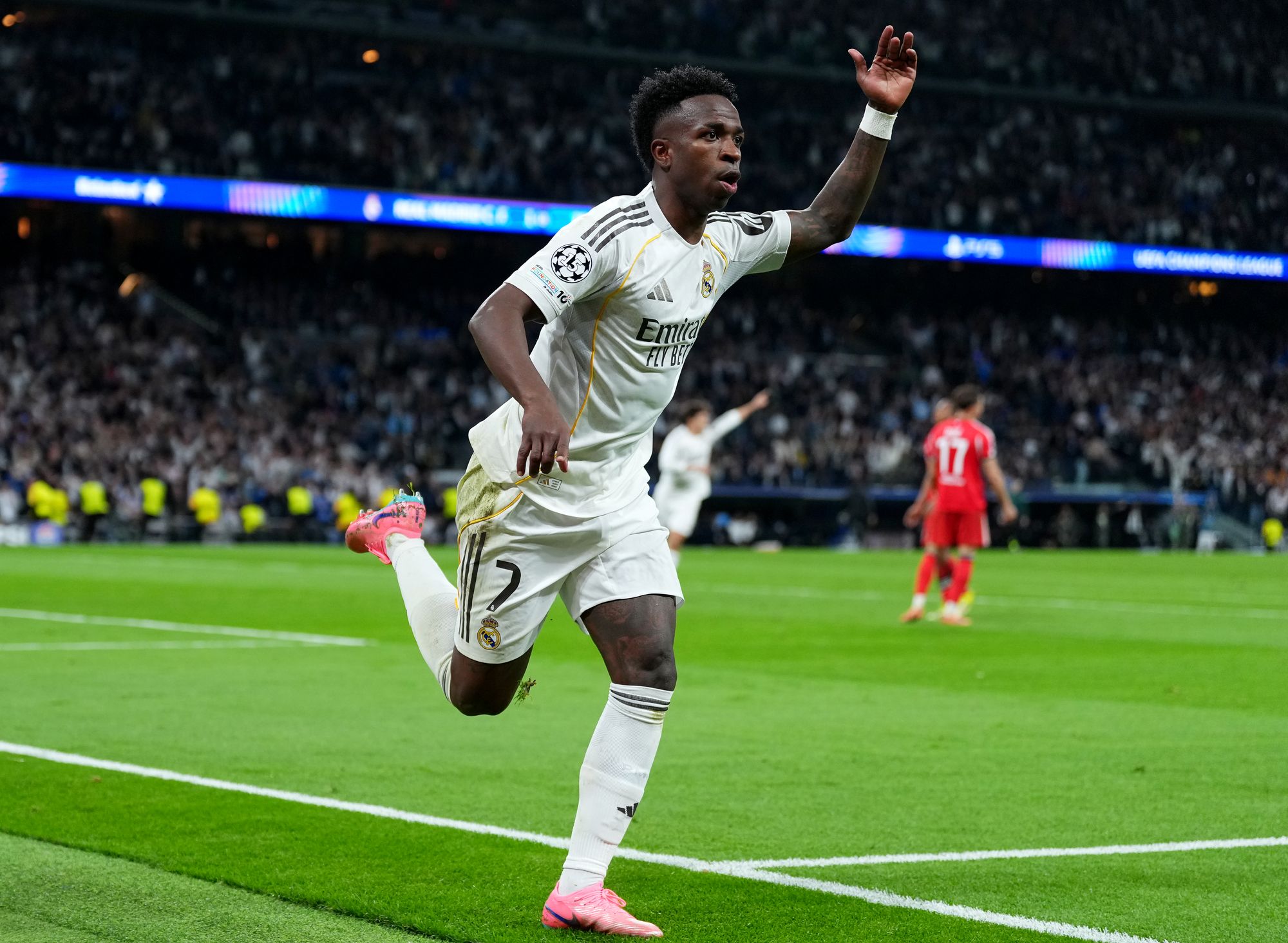
Roc Nation, the agency representing Vinicius, slammed recent media publications as ‘fake and damaging information’ released ‘for attention-seeking purposes’, although they did not clarify if this backlash was specifically about Vinicius or other athletes they manage.
Earlier reports from The Athletic indicated that during negotiations, Vinicius sought a fresh contract valued at €30 million annually, a figure encompassing his base wages, performance incentives, and a signing-on fee.
The inclusion of this renewal bonus has allegedly caused friction between the forward and the club, despite the 26-year-old reportedly being willing to reduce his total financial expectations to remain at the Bernabeu.
Notably, a recent update from Spanish publication AS highlights that Vinicius also ‘aspires’ to secure a specific arrangement regarding his image rights.

The news source states that the Brazilian is pushing for a deal mirroring Kylian Mbappe’s, which allows the French star to retain almost 100 per cent of his image rights within his Real Madrid terms.
Currently, 18 distinct companies have endorsement deals with Vinicius, featuring major names like Nike, Visa, PlayStation, Apple, and Gatorade.
Under his present agreement, the winger supposedly keeps 50 per cent of the earnings from his image rights.
What are image rights?
In the footballing world, image rights encompass all intellectual property tied specifically to a player. This includes their legal name, nicknames, photographic likenesses, vocal recordings, signatures, and social media accounts.
The Premier League enforces stringent rules regarding these rights, which frequently prolongs the contract negotiation process for incoming players.
This process can be so thorough that after reaching an agreement with the player, a club must then hold separate discussions with the dedicated firm established to govern that player’s image rights.
Clashes may also arise if a club’s official sponsors directly compete with the player’s personal endorsement deals.
For example, Arsenal holds a global partnership with Coca-Cola, whereas Vinicius is tied to their competitor, Pepsi. However, there is no indication that this clash would hinder the Gunners’ talks with the attacker.
Sporting director Andrea Berta has reportedly initiated conversations with Vinicius’ camp, and the North London side is now observing the outcome of the Madrid discussions to potentially finalize one of the most massive transfers in Premier League history.