
Lionel Messi experienced a rare unwanted first after his penalty was saved against Nashville SC, extending his run to three consecutive missed spot kicks as Inter Miami were beaten 4-1.
Lionel Messi has broken countless records during more than two decades at the top of world football. His latest one, however, is a record the Inter Miami superstar will want to forget as quickly as possible.
Messi missed from the penalty spot during Inter Miami’s 4-1 defeat to Nashville SC on Saturday night, extending his extraordinary recent run to three consecutive penalty misses for the first time in his career. ESPN reported the third straight failure, while AS noted that Messi had never previously failed to convert three consecutive regulation-time penalties.

The miss could hardly have arrived at a more important moment.
Nashville were leading 1-0 when Miami were awarded a penalty in the 23rd minute after Maxwell Woledzi fouled Luis Suárez. Messi stepped forward with the opportunity to bring his team level, but goalkeeper Brian Schwake read the attempt and made the save.
Instead of another trademark Messi moment, the night became increasingly painful for both the Argentine and his team.
Messi had the chance to immediately rescue Inter Miami
Nashville had made a dominant start at GEODIS Park.
Andy Najar opened the scoring in the 17th minute, heading home an Elias Saad cross after Nashville produced the opening four shots on target of the match. Only six minutes later, however, Miami were handed the perfect opportunity to erase the deficit.
Messi took responsibility.
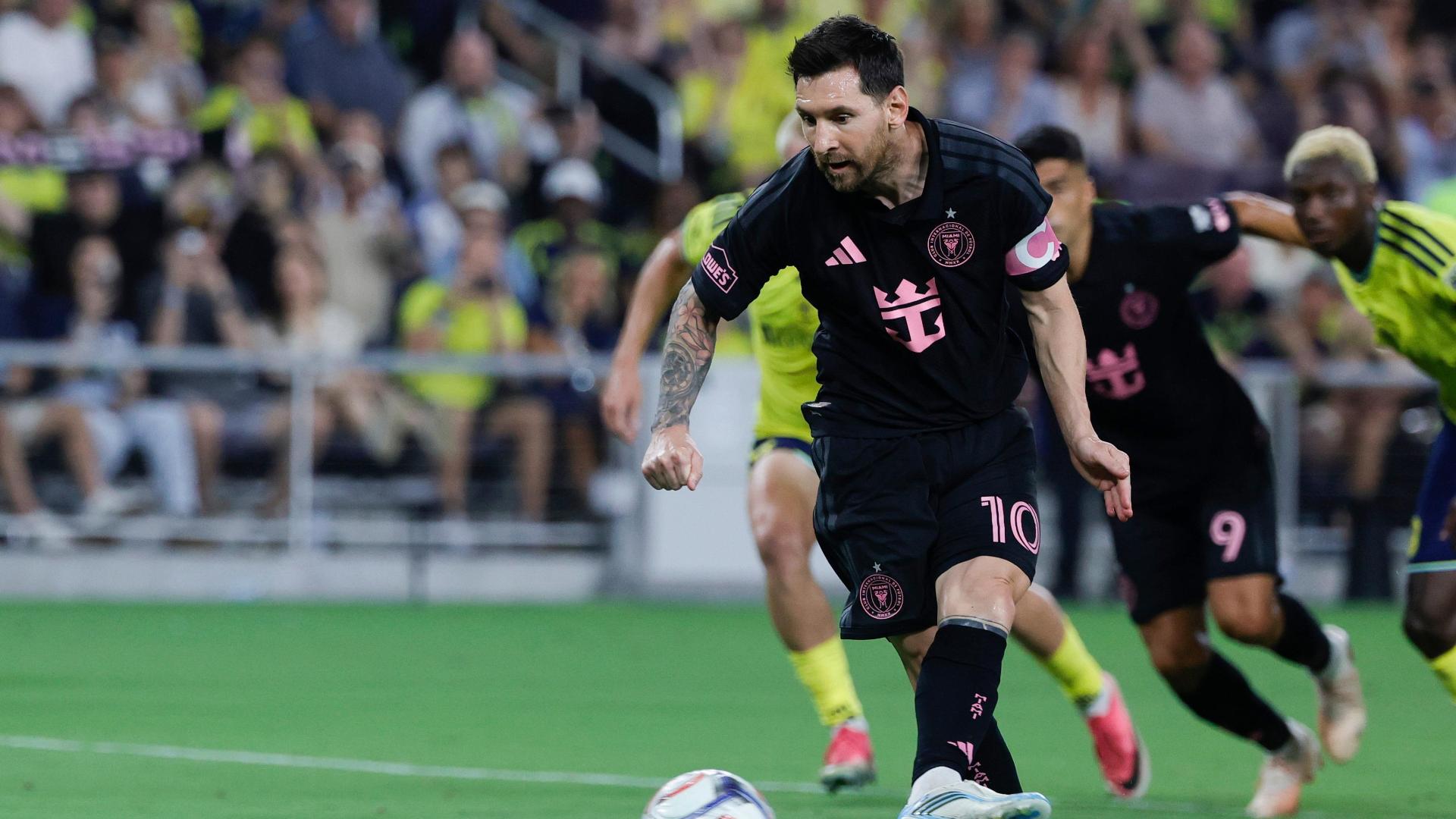
Schwake won the duel.
The Nashville goalkeeper stopped Messi’s penalty and protected the 1-0 advantage at a moment that could have dramatically changed the direction of the contest.
For almost any other player, it would simply have been a costly penalty miss.
For Messi, it completed a highly unusual sequence stretching from the World Cup to MLS.
Three penalties. Three misses.
Messi’s previous two regulation-time penalties had both come with Argentina during the 2026 World Cup.
On June 22, he failed to convert against Austria. He then missed again against Egypt on July 7. His next penalty opportunity arrived against Nashville on August 15, and that attempt was also unsuccessful.
The sequence is therefore:
June 22: Argentina vs Austria. Missed.
July 7: Argentina vs Egypt. Missed.
August 15: Inter Miami vs Nashville. Missed.

MessiStats’ chronological penalty record shows no converted regulation-time penalty between the Austria and Egypt misses, while Saturday’s Nashville failure extended the sequence to three.
AS reports that this is the first occasion in Messi’s remarkable career that he has missed three penalties consecutively.
An unwanted record for football’s greatest record-breaker
The irony is difficult to ignore.
Messi’s career has been defined by records that seemed impossible until he broke them.
Goals.
Assists.
Ballon d’Or awards.
Championships.
International milestones.
But penalties have always provided one of the more unpredictable elements of his game.
Sporting News calculated earlier this summer that Messi had converted just under 78 percent of his regulation-time career penalties at that stage, a strong figure but significantly less dominant than many of his other attacking statistics.

The 2026 World Cup made the issue even more prominent.
Messi’s misses against Austria and Egypt took him to four failed regulation-time penalties across his World Cup career, the most by any individual in tournament history according to Guinness World Records.
Saturday’s miss was not a World Cup penalty, but it extended the same run into his return to club football.
Schwake refused to become another Messi victim
Brian Schwake’s save deserves its own credit.
The Nashville goalkeeper finished the match with four saves as his team strengthened its position at the top of MLS. Reuters reported that Nashville improved to 43 points after the victory, with Miami remaining on 38.
The biggest save came against the biggest player.
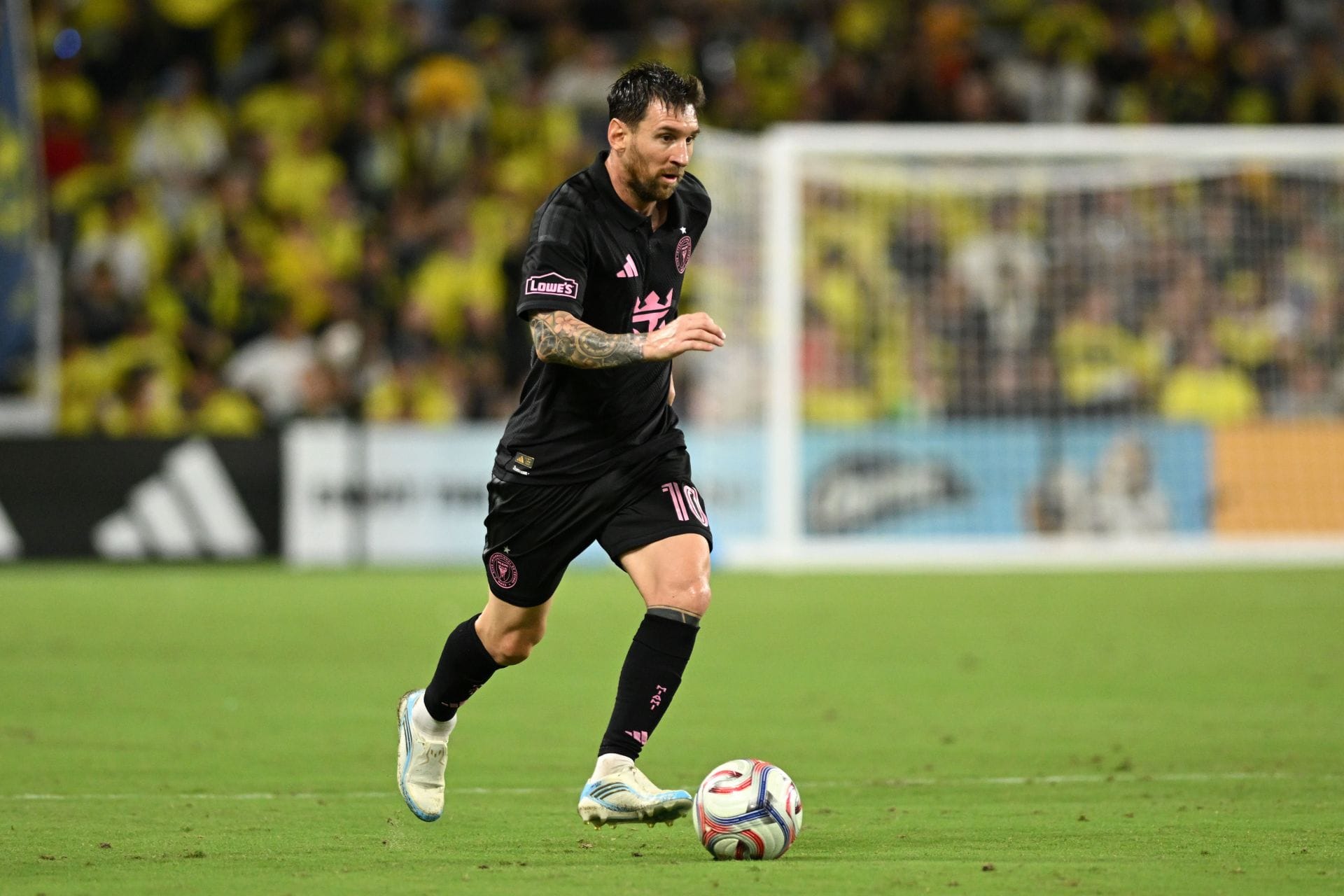
Messi’s spot kick offered Miami a route back into the game while Nashville’s lead was still only one goal.
Schwake prevented it.
And although Inter Miami later equalized before half-time, Nashville eventually took complete control of the contest.
Messi still created Inter Miami’s equalizer
The penalty miss did not completely remove Messi from the game.
In first-half stoppage time, he found Telasco Segovia inside the attacking area before the Venezuelan worked his way past defenders and curled the equalizer beyond Schwake.
Inter Miami’s official match report credited Messi with the assist as Segovia made it 1-1 shortly before the break.

At that point, Miami had survived a difficult opening half.
The missed penalty appeared less damaging.
They were level.
Messi had still produced a decisive contribution.
And the second half offered an opportunity to reset.
Instead, Nashville overwhelmed them.
Nashville destroy Miami after half-time
Hany Mukhtar restored Nashville’s advantage only four minutes after the restart, finishing from the left side of the box for his seventh league goal of the season.
Sam Surridge then made it 3-1 in the 56th minute before Mukhtar added his second seven minutes later after Inter Miami goalkeeper Rocco Ríos Novo slipped while attempting to deal with a long goal kick.
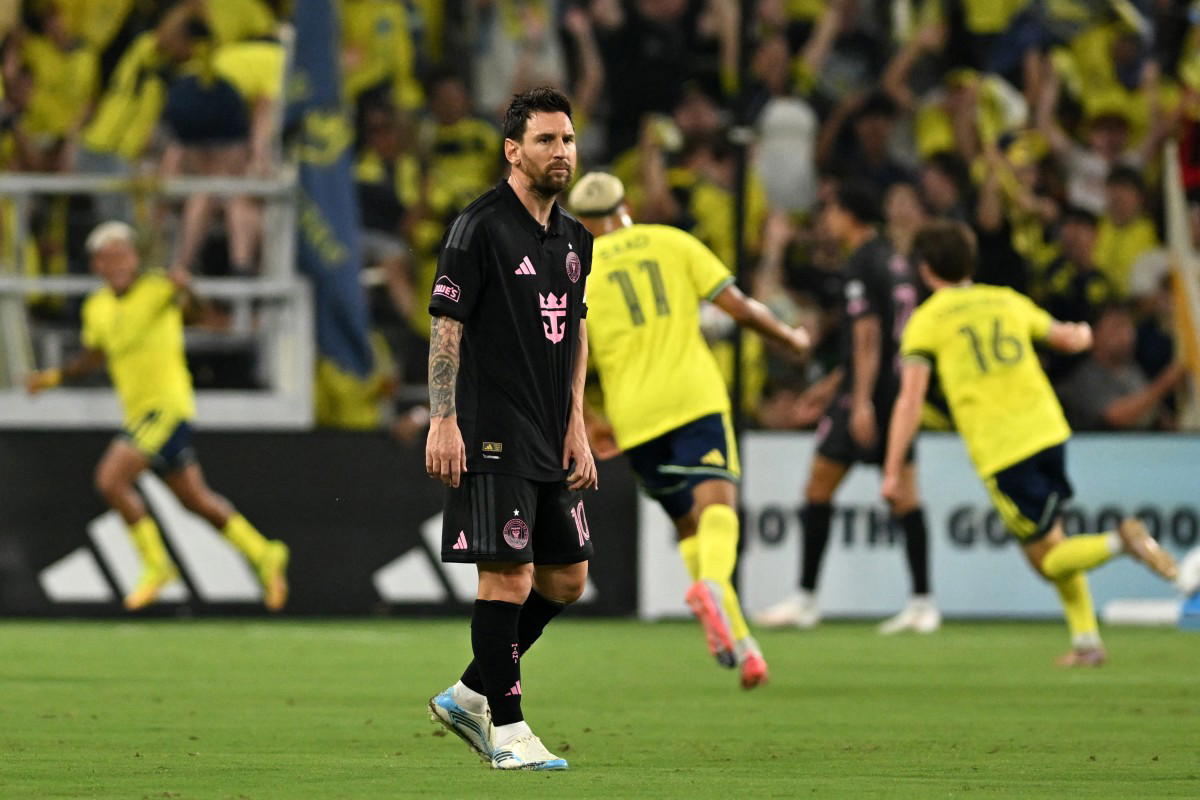
The final score was Nashville 4-1 Inter Miami.
It was Miami’s first MLS defeat since May 2 and ended a seven-game unbeaten run in league play. Nashville, meanwhile, strengthened the best record in MLS.
Messi’s frustration boiled over
The penalty miss was not Messi’s only headline-making moment.
AS reported that the 39-year-old became visibly frustrated later in the match after Nashville’s third goal.
Messi believed the move should have been stopped following an incident in midfield and protested toward the referee. He was subsequently booked and responded by applauding the decision sarcastically, a moment that quickly attracted attention online.
It was an unusually frustrating night for a player normally associated with complete control of the biggest occasions.
A missed penalty.
A heavy defeat.
A yellow card.
And an unwanted career first.
The contrast with Messi’s World Cup was remarkable
The penalty struggles are particularly interesting because they occurred during a period in which Messi was still producing historic moments from open play.
Against Austria at the World Cup, Messi missed from the spot but later scored twice as Argentina won 2-0. His goals that night took him beyond the previous World Cup scoring records held by Miroslav Klose and Marta.
In other words, the problem from 12 yards has not necessarily reflected a wider collapse in Messi’s attacking ability.

That makes the three-miss sequence even stranger.
He can still create goals.
He can still score from open play.
Yet the most controlled scoring opportunity in football has suddenly become the place where he is struggling most.
Should Inter Miami reconsider their penalty taker?
The obvious question now is what happens the next time Inter Miami receive a penalty.
Messi has spent his career accepting responsibility in the biggest moments, and one poor run is unlikely to erase that status immediately.
But Miami have other experienced penalty takers, most notably Luis Suárez.
With Messi now having failed on his last three attempts for club and country combined, the issue will inevitably generate discussion before his next spot kick.
There is currently no indication from Inter Miami that Messi has been removed from penalty duties, so any suggestion that another player will automatically take the next one would be premature.
Penalty misses have followed Messi throughout his career
Although three consecutive misses are unprecedented for him, individual failures from the spot are nothing new.
Messi’s penalty history contains several famous examples.
He missed against Chelsea in the 2012 Champions League semifinal.
He was denied against Iceland at the 2018 World Cup.
Wojciech Szczęsny saved his effort against Poland in 2022.
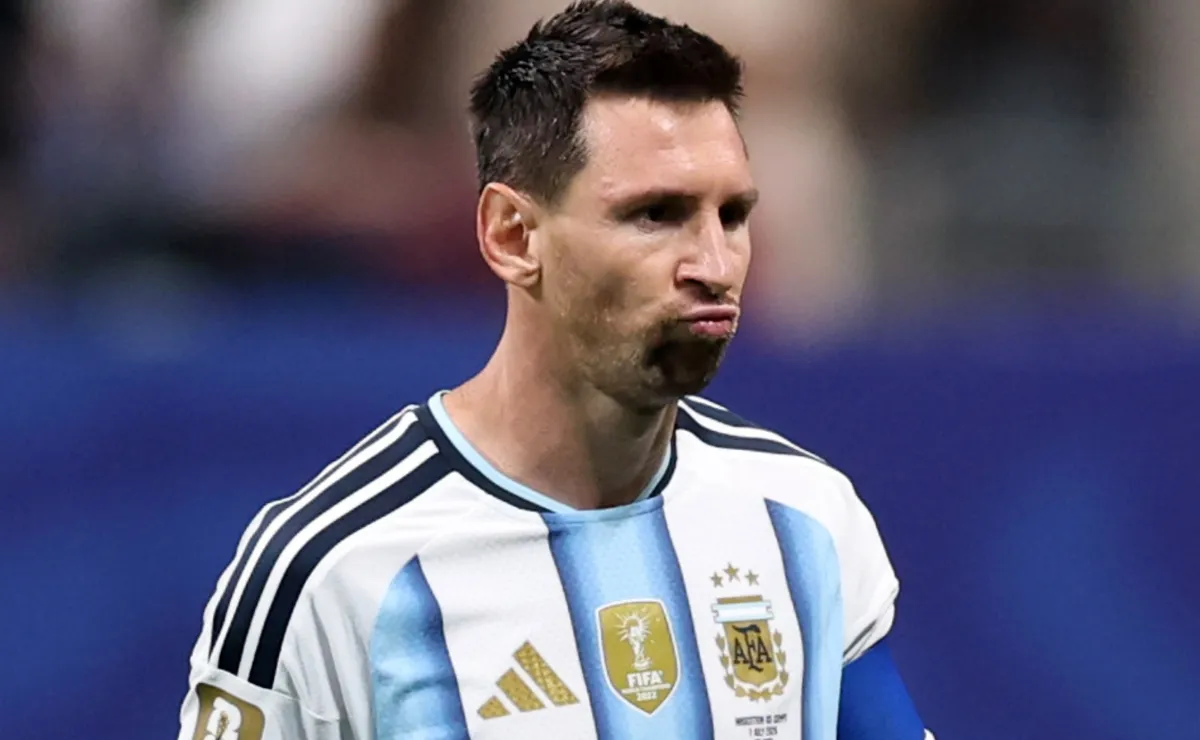
And he failed from the spot against Real Madrid while playing for PSG in the Champions League in 2022.
Yet Messi has also converted penalties on the biggest stages, including during Argentina’s triumphant 2022 World Cup campaign and multiple shootouts throughout his career.
That history is why his current run stands out.
Messi has missed before.
He simply had never missed three consecutive regulation-time penalties until now.
One miss changed the entire mood of the night
There is no guarantee Inter Miami would have won had Messi scored in the 23rd minute.
Nashville were the stronger side for long periods and eventually created a convincing 4-1 margin.
But the timing of the opportunity mattered.

At 1-0, Miami had an immediate chance to erase Nashville’s excellent opening.
A successful penalty would have changed the score to 1-1 more than 20 minutes before half-time.
Instead, Nashville survived, and Schwake’s save became one of the defining moments of the match.
Inter Miami now have to respond quickly
Miami do not have long to dwell on the defeat.
The club’s official schedule has them returning to action on Wednesday, August 19, when they travel to face the Philadelphia Union at Subaru Park.
For Messi, the next match offers an opportunity to shift attention away from his penalty record and back toward what he normally does best.
But the next time a referee points to the spot, every camera will be watching.
Messi’s next penalty just became must-watch football
Three consecutive failures would be noteworthy for any elite forward.
For Lionel Messi, it is extraordinary.
His first two misses came while representing Argentina at the World Cup.
The third arrived wearing Inter Miami pink in Nashville.

And for the first time in his legendary career, three consecutive regulation-time penalties have ended without a goal.
The remarkable thing about Messi is that he has spent most of his career turning pressure into history.
This time, history arrived for the wrong reason.
Brian Schwake saved the penalty.
Nashville won 4-1.
And Lionel Messi left Tennessee with one of the rare records he would rather not own.